My first book is available now on Kindle! If you’d like to get a tour of the universe and explore the cosmos, check it out!
Our Universe: A Cosmic Tour now available!
Embark on a mesmerizing expedition through the vast expanse of the cosmos, where the wonders of the solar system, the mysteries of the universe’s structure, the enigma of the Big Bang, the allure of the Milky Way, and the chilling prospect of the Heat Death of the Universe and the end of time await. In “Our Universe, A Cosmic Tour,” join us as we explore the captivating realms of space, taking readers on an enlightening journey that unveils the secrets of our celestial neighborhood and unravels the profound mysteries that have fascinated humanity for eons.
“Our Universe” is a concise and engaging guide to the cosmos, covering everything from the formation of the solar system to the latest discoveries in astrophysics, such as Dark Energy, Black holes, and the very structure of our Universe. This book is perfect for anyone who wants to learn more about the universe and our place in it, presented in easy-to-read language.
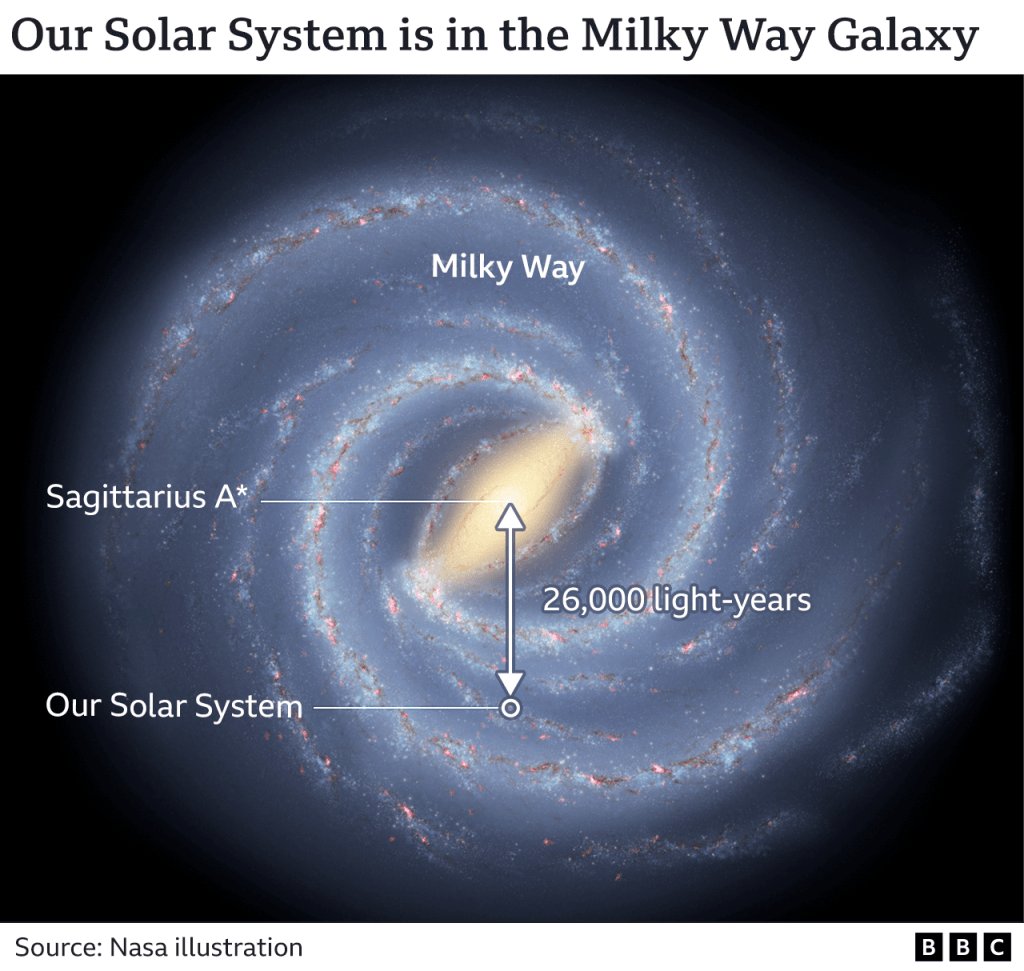
The book is divided into five parts. The first part, “The Beginning,” explores the Big Bang and the origin of the Universe. The second part, “The Earth,” takes readers on a tour of our species’ history on Earth. The third part, “The Planets and Moons,” looks at all the major bodies and entities in our Solar System. The fourth part, “The Galaxy,” explores the Milky Way galaxy and its layout, and the final chapter, “The Universe,” explores the structure of our reality and the cosmos, ending with the end of time at the edge of the Universe.
Each chapter in “Our Universe, A Cosmic Tour” is packed with accessible information and visuals. Whether you’re a seasoned astronomer or a complete beginner, “Cosmic Odyssey” is a concise, essential read for anyone who wants to learn more about the universe.
So what are you waiting for? Embark on your cosmic journey today!
I ended up browsing the NASA press release section of their website, and found an interesting report that asked NASA’s Space Nuclear Systems division to present a report on the feasibility and future of nuclear power in future space missions. The future of nuclear power in space. In short, NASA will be relying on nuclear power technologies as they venture further and further from the Earth, on longer and longer missions. A first crewed human mission to Mars is expected to take about 700 to 900 days. What viable options do we have to power the ship, when increasing distance from the sun reduced the efficiency of solar panels? On Mars, the solar flux density is 1/3 that of Earth.
The answer is modular nuclear power. We can expect that the first permanent moon base, the first expedition to Mars and the first Mars base to all use nuclear power, due to the it’s energy density and much smaller mass requirements when compared to fossil fuels and solar energy.
Continuing with my excuse to read up on the crazy stuff in space, have a new video, on Black Holes, one of the most mysterious and the darkest objects in the universe.
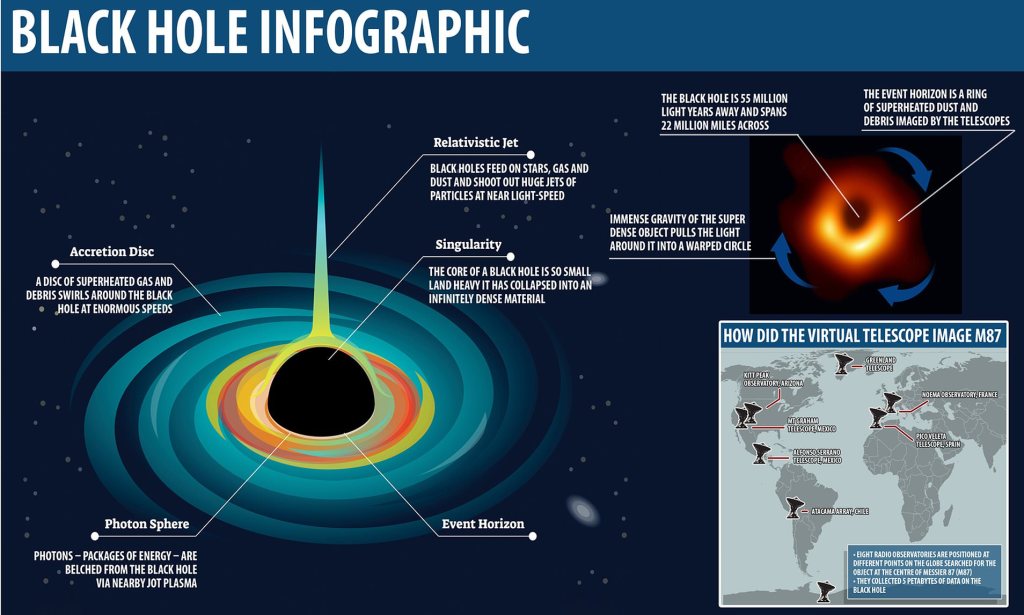
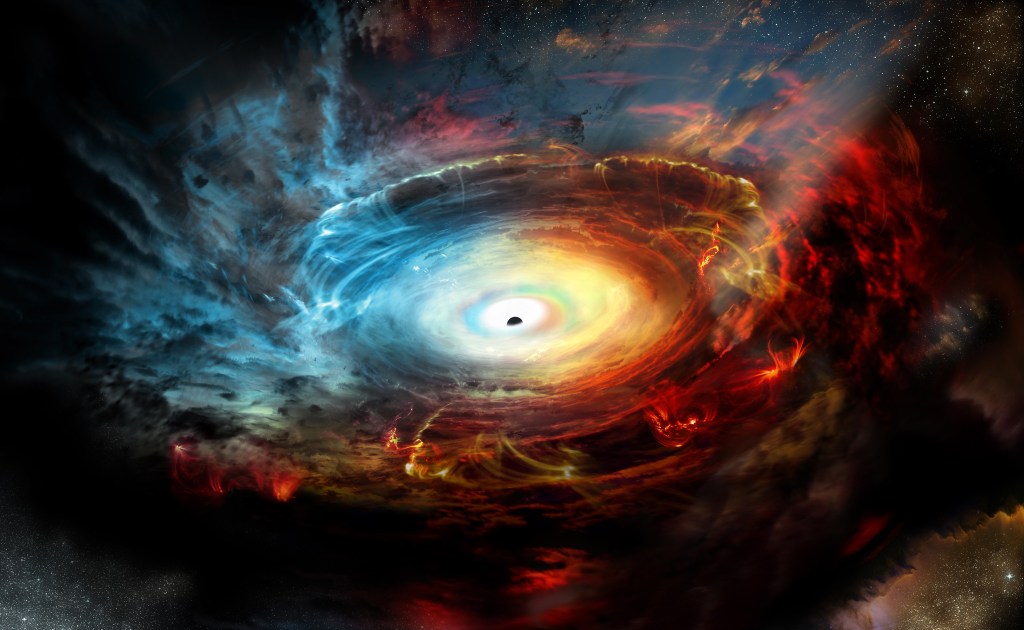
Black holes represents an oddity in space and the universe, they are singularities of mass. Representing points of immensely high density that is able to completely warp and break the law of physics and space time. Their massive gravitational fields make it so that no light, object or anything can escape the gravitational field of a black hole.
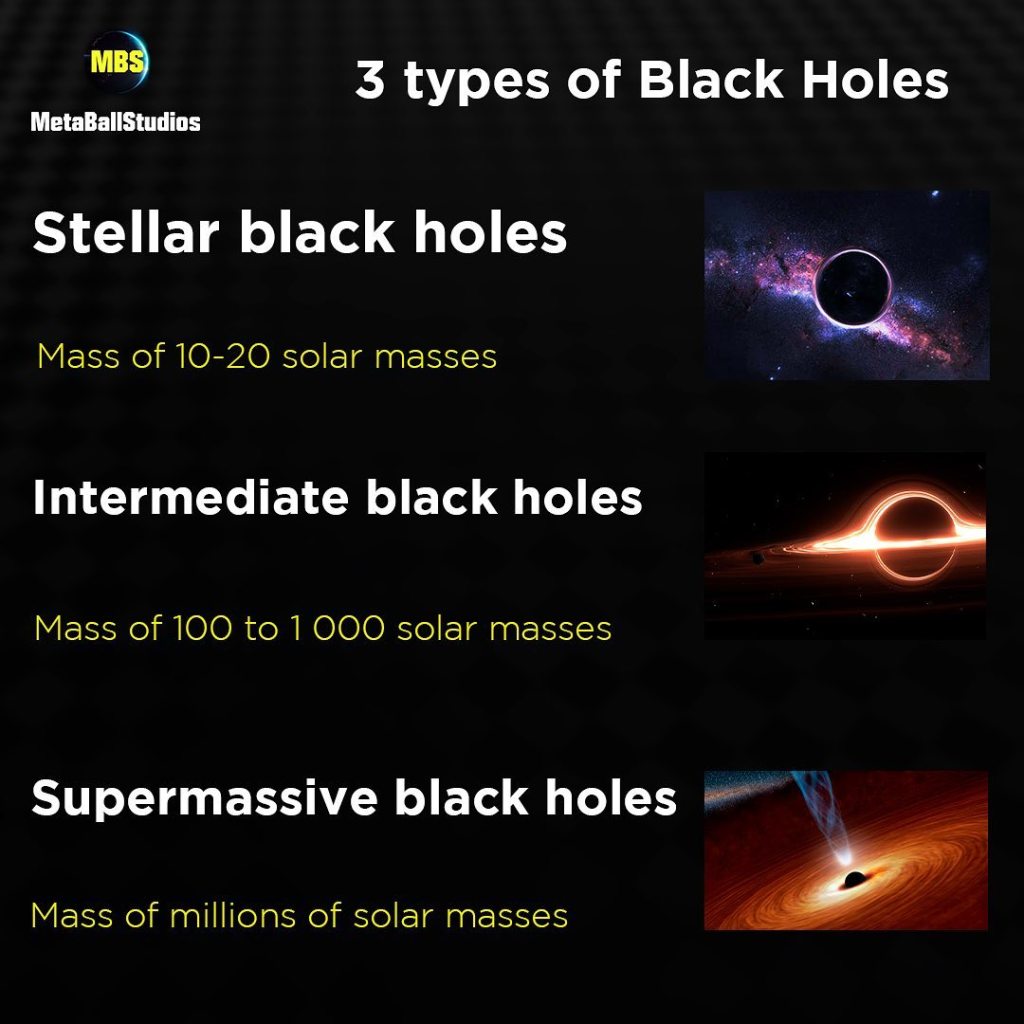
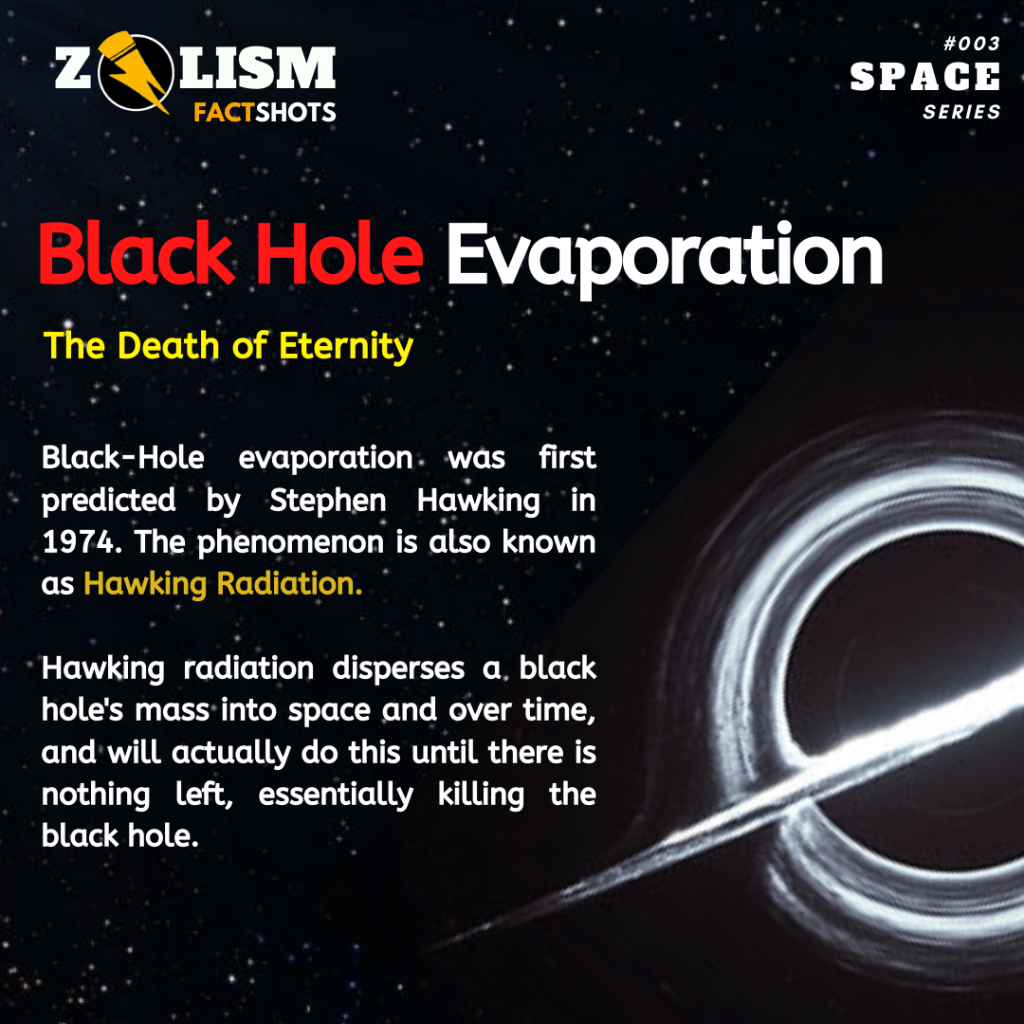
In this video, we’ll go over the basics of what black holes are, their physics, what types of black holes exists, the closest super massive black hole (Sagittarius A), Hawking radiation, Neutron Stars and their connection with black holes, Black holes in the media, how telescopes like the James Webb help, neutrinos and black holes, quasars (quasi stellar radio sources), and lastly, what happens if you fall into black holes.
I personally find black holes mesmerizing and fascinating due to how little we know about them, and how our understanding of physics and science breaks down when space time is so warped by intense gravitational field. The mass they represent is mind bogglingly huge, with super massive black hole can have masses beyond 1 billion solar masses!
So join us on a overview of what we know about the Darkest Objects in the universe, these mysterious singularities formed through space.
On the left, an optical image from the Digitized Sky Survey shows Cygnus X-1, outlined in a red box. Cygnus X-1 is located near large active regions of star formation in the Milky Way, as seen in this image that spans some 700 light years across. An artist’s illustration on the right depicts what astronomers think is happening within the Cygnus X-1 system. Cygnus X-1 is a so-called stellar-mass black hole, a class of black holes that comes from the collapse of a massive star. New studies with data from Chandra and several other telescopes have determined the black hole’s spin, mass, and distance with unprecedented accuracy.Image converted using ifftoany
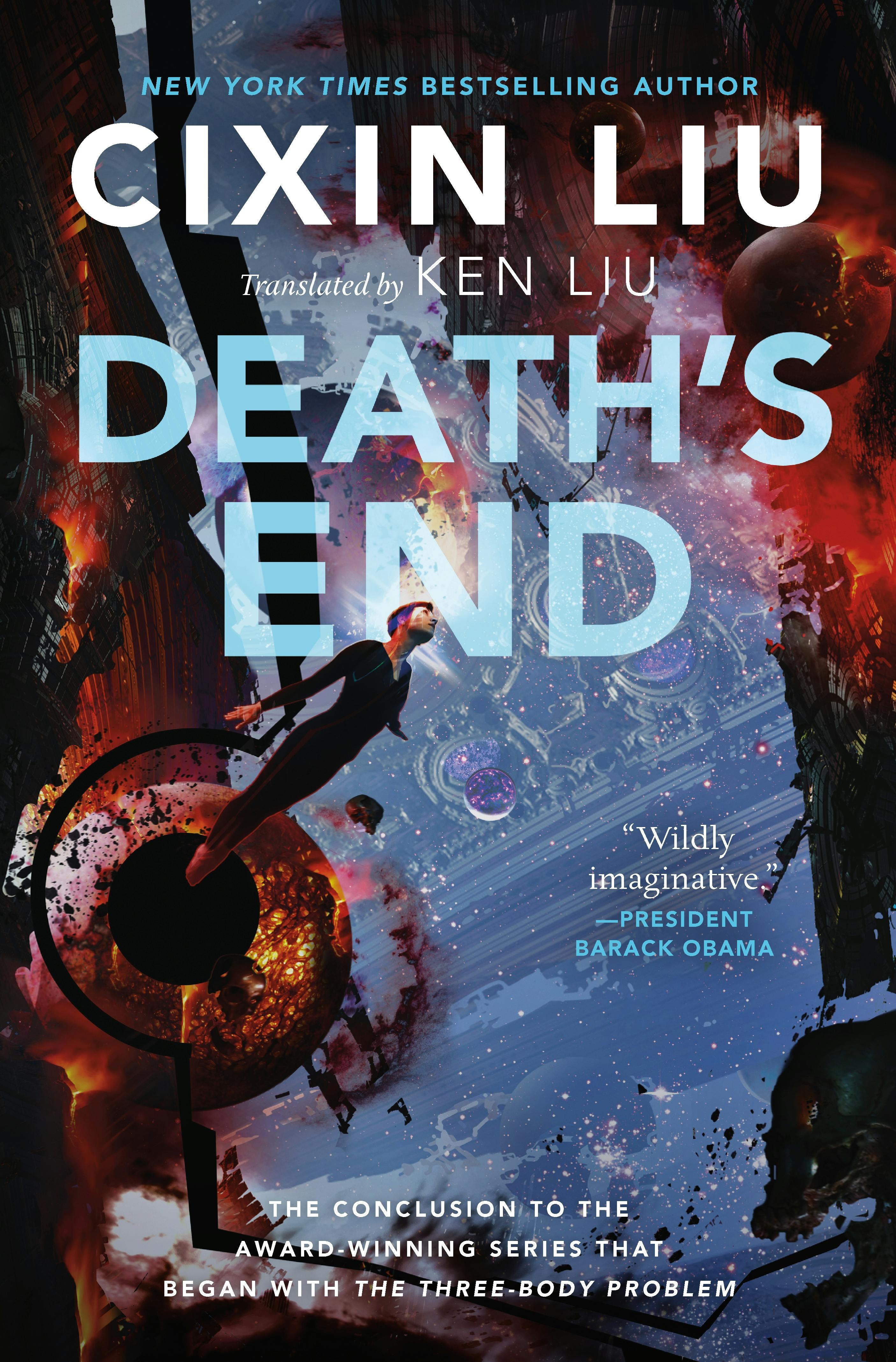
What is dark energy? What is this mysterious and secretive force of nature and science? Why are the stars and the galaxies racing away from us? Will humanity ever be able to leave the solar system? How does the grand finale of Cixin Liu’s Death End hold up to scientific review?
Edwin Hubble, as a young scientist returning from the Great War noticed that in all of his observations of space, stars and galaxies seems to be moving away from us. Every celestial body measured through red shift showed acceleration away from the solar system and the milky way galaxy. The discovery of the expansion of the universe lead to the formulation of the Hubble constant; which states that that further a celestial body is from the observer, the faster it will appear to move away from the observer due to the expansion of space-time, which lead to the one of the biggest discoveries in cosmology, the discovery of dark energy within of our universe.
Dark energy is the unseeable, untouchable and undetectable energy that humanity attributes the increasing acceleration of the universe to. The law gravity tells us that mass attracts, so universe should be deaccelerating and eventually lead to the Big Crunch, and yet everything is accelerating and might one day lead to the Big Rip. How did mass get so concentrated during the Big Bang? What happens when time goes to infinity? What happens if space time and the universe keep expanding until the end of time, until the heat death of the universe, what will happen to entropy in a infinitesimally large universe?
—————– Spoilers for Cixin Liu’s “Death’s End”, the last novel of the Rememberance of Earth’s Past Series, also known as “The Three Body Problem” ———————————————————– Spoilers ——- I have tried
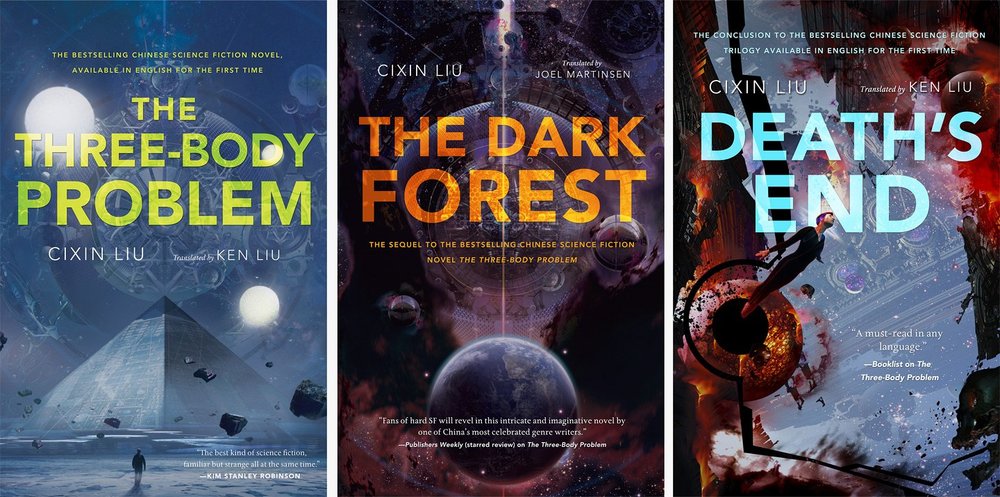
After talking about the science, the video goes into the choices that Cheng Xin and Guang Yi Fang have to make at the end of Death’s End, which would decide the fate of the universe in the far away year of 18,906,416 BC. Would they return the needed matter back to their original universe, from the Trisolaran made pocket dimension. What choices would the last remnants of humanity make? Eventually Cheng Xin and Guang Yi Fan decide they must do the right thing, that in spite of how incomprehensible this universe is, they want to return the mass of their pocket dimension back to the universe. Making the universe whole again, and allowing the universe to collapse in upon itself, leading to another Big Bang, and thus allowing the universe to reset itself. Allowing for the great cycle to continue, for the great wheel to keep turning, for the universe to regenerate and reconstitute itself and allowing life to spring forth again. Hoping that maybe next time things will be better in the Dark Forest. Death’s end is the final of the three books in Cixin Liu’s Three Body Problem (Also known as “The Rememberance of Earth’s Past Saga). The first and second books in the series are “The Three Body Problem” and the magnificent “The Dark Forest”. Winner of the prestigious Hugo Award for Sci fi. A new thrilling and fascinating look at horror and physics. The struggle between the humans and the trisolarans for the control of the solar system. How would Earth and its greatest minds deal with the impeding doom of such an advanced alien race living in the star closest to us.
I highly recommend the Three Body Problem series if you are into SciFi, my personal favorite read of 2022. Netflix is producing a live action adaptation of the first book “The Three Body Problem”, let’s hope they don’t botch it.
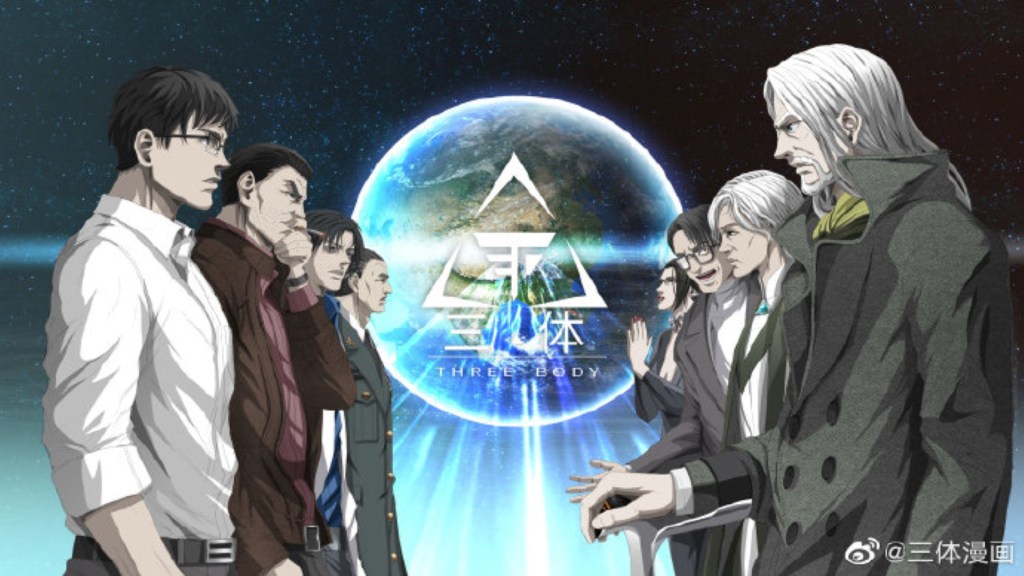
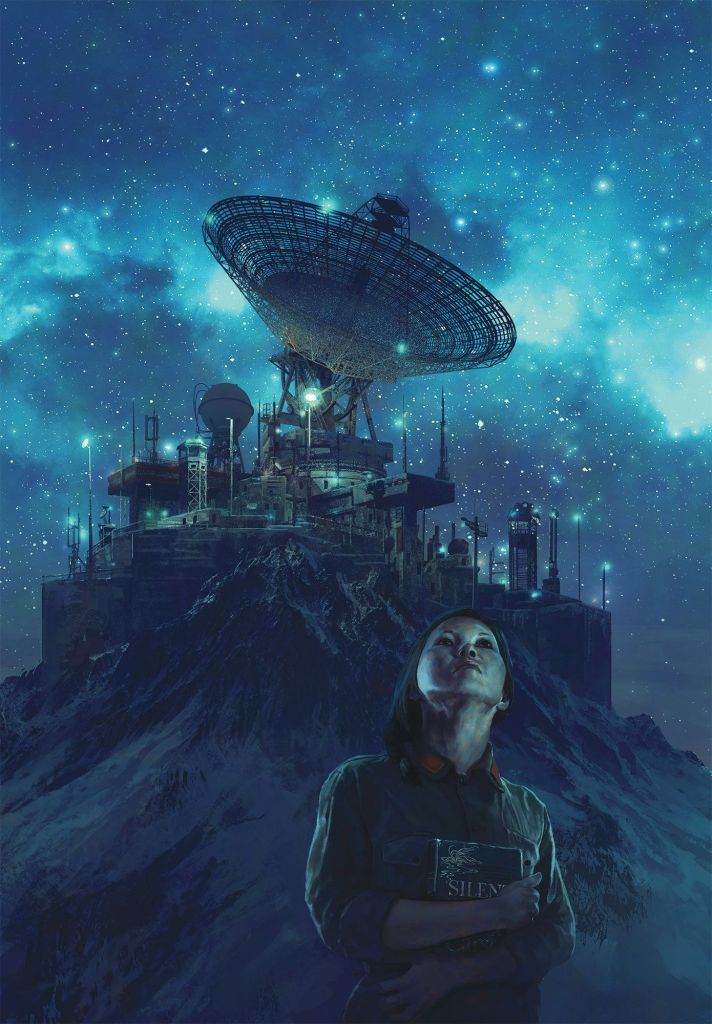
Since I had downloaded it for the video, I had a bunch of fan art and media for Three Body Problem, so I figured I’d upload it here since they are pretty.
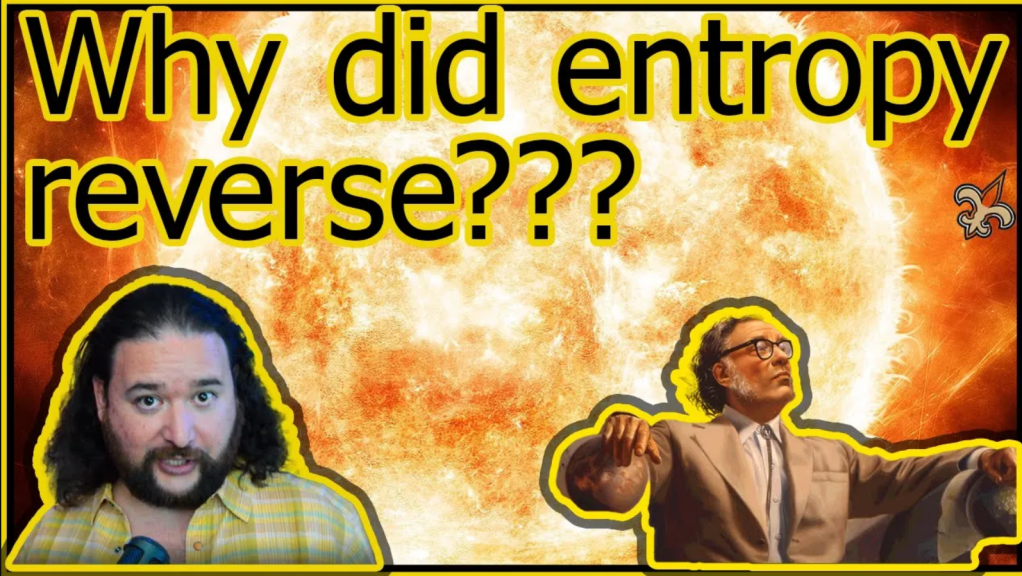
Entropy is one of what I consider a mystery of the universe (along with Dark Matter and Dark Energy). Entropy itself is not a mystery, but rather why does it only ever increase? And why was the Big Bang a moment of tremendously low entropy? How did entropy reverse itself? Entropy reversing is the central theme to Isaac Asimov’s short story “The Last Question” (You can read it here: https://www.physics.princeton.edu/ph115/LQ.pdf)
In the short story, humanity rises, falls and transcend all without being able to figure out how did entropy reverse itself, even with the help of the super computer Multivac. Multivac started off as a super computer, but as the story continues, it becomes a transcendent universe computational entity, that once humanity has faded, is able to figure out, Why did entropy reverse itself at the beginning of time.
Entropy is defined as: “Entropy is a thermodynamic quantity that measures the amount of disorder or randomness in a system. It is a measure of the energy dispersal in a system. Low entropy means that the system is ordered, while high entropy means the system is disordered.”
In short, you can think of it as a measure of how “spread out” energy is in the universe. At the beginning of time, it was concentrated, at the end of time, energy will be evenly spread out across the universe.
Mysterious fundamental particle (Lepton). Here is the transcript of the video if you’d prefer the content in text form:
There exists a particle so small that billions if not trillions are traveling through you right now. They are so small and have such a small charge that they go right through molecules and atoms. Forged in high-energy environments like the nuclear furnace in the core of our sun. Particles that can travel through hundreds of miles of matter as if it wasn’t there, and they are so small they make an electron look as big as the sun. These particles are called neutrinos.
Neutrinos are subatomic particles that have very little or no mass and virtually no electrical charge. They are the most abundant particles in the universe and are produced in vast numbers in high-energy particles such as those observed in cosmic rays and other radioactive processes. Neutrinos interact extremely weakly with matter, making them difficult to detect. Neutrinos are mind-bogglingly tiny. They are hundreds of thousands of times lighter than the next lightest particle, which is the electron. They’re also ubiquitous. Tens of trillions of neutrinos pass through your body every second, originating mostly from the sun. But because of their small size and lack of charge, they rarely interact with your tissues—or anything else.
Neutrinos can pass through matter because they interact extremely weakly with other particles. This means that they do not interact with the atoms and molecules that make up matter, and thus can pass through it almost unimpeded. This makes them ideal for studying the universe, as they can travel vast distances in a relatively short amount of time.
Neutrinos come in three types, or flavors: electron, muon, and tau. The different types of neutrinos differ in terms of their mass, with electron neutrinos having the least mass and tau neutrinos having the most. They also differ in terms of how they interact with matter. Electron neutrinos interact weakly with matter, while muon and tau neutrinos interact more strongly. Finally, each type of neutrino oscillates between the other two types as they travel through space, so that an electron neutrino may eventually become a muon or tau neutrino.
Neutrinos are formed when a neutron inside of an atom decays into a proton and an electron, sending the electron away from the atom. This electron is known as an electron neutrino and is released from the atom in the form of a neutrino particle. Neutrinos can also be produced during various types of nuclear reactions, such as those that occur in a nuclear reactor. Or the fusion that occurs in the sun and stars
In 1930 renowned physicist Wolfgang Pauli was puzzled over a seemingly impossible conundrum. Over multiple experiments, Pauli’s contemporaries had noticed an accounting error when observing beta decay, a process by which certain radioactive atoms break down. Rather than being emitted as electrons, a small fraction of the decaying atom’s energy had apparently vanished.
This observation broke the first law of thermodynamics, which states that energy cannot be created or destroyed. So Pauli proposed what he described as a “desperate remedy”: a new type of small, chargeless fundamental particle that was emitted alongside the electrons and accounted for the missing energy. The idea of the neutrino was born.
Neutrinos were first detected in 1956 by American physicist Clyde Cowan and Frederick Reines in the neutrino experiment at the Savannah River Site in South Carolina.
It is estimated that around 65 billion neutrinos pass through every square centimeter of the Earth’s surface every second. This means that billions of trillions of neutrinos pass through the Earth each second. The weak force has a very short range, the gravitational interaction is extremely weak due to the very small mass of the neutrino, and neutrinos do not participate in the strong interaction. Thus, neutrinos typically pass through normal matter unimpeded and undetected.
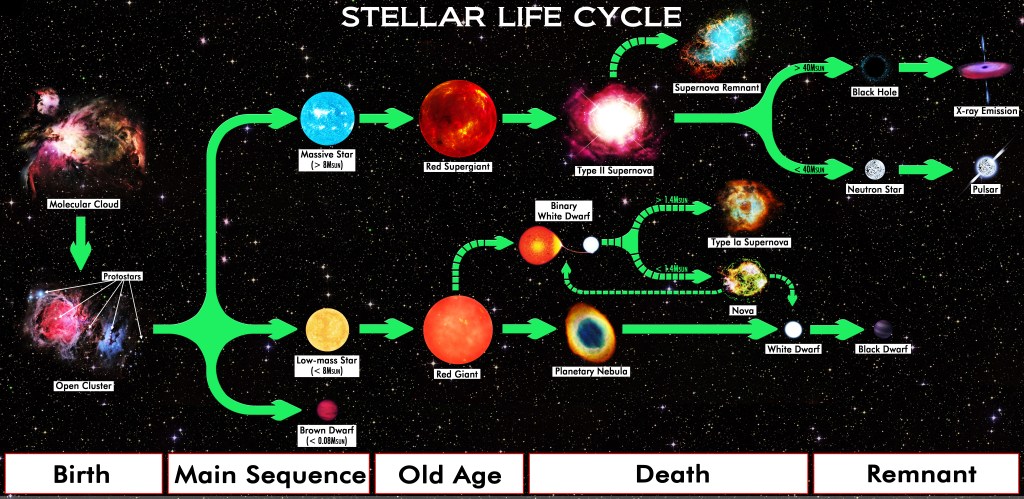
Supernovae are violent stellar explosions that occur when the core of a massive star collapses in on itself. During a supernova, huge amounts of energy are released in the form of gamma rays, X-rays, visible light, and high-energy particles, including neutrinos. Supernovae can be used to study the structure and evolution of galaxies, and can even be used to measure the expansion of the universe.
Neutrinos are formed in supernovae as a result of the high-energy reactions taking place inside the collapsing star. During the explosion, protons and neutrons are fused together to form heavier elements, releasing a tremendous amount of energy in the form of neutrinos. These neutrinos carry away a large portion of the energy released by the supernova, allowing it to cool and eventually fade away.
Neutrinos are everywhere in the universe, but they are difficult to detect because they have virtually no mass and interact weakly with other particles. Neutrinos are created in the sun, in Earth’s atmosphere by cosmic rays, and in nuclear reactions in stars and supernovae. They can also be created artificially in particle accelerators.
Neutrinos are detected by measuring the tiny amount of energy they deposit when they interact with matter. This is usually done using very large, specialized detectors filled with a medium such as water or liquid scintillator. These detectors are designed to detect the Cherenkov radiation or scintillation light produced when a neutrino interacts with the medium.
Cherenkov radiation and scintillation are two different types of light emission that occur when high-energy particles pass through a medium. Cherenkov radiation is the blue glow that is seen when a charged particle passes through a medium at a speed faster than the speed of light in that medium. Scintillation is the flash of light that is produced when an ionizing particle passes through a material such as a crystal or liquid scintillator.
Some examples of neutrino detectors on Earth include:
On Dec 11 2022, NASA’s Artemis 1 Orion capsule returned from it’s orbit around the Moon, and successfully splashed down in the Pacific Ocean, with the capsule landing safely and intact. Paving the way for Artemis 2 to take a 4 person crew around the Moon, in preparation for the Artemis 3 crewed moon landing, the first human precense on the Moon since Apollo 17 in the 70’s. Here’s a 1 min edit of the NASA stream covering the reentry of the Orion capsule.
Rocketry, space agencies and exploration, moon mission and human landing on Mars! Explanation of rocketry flight and propulsion, basics of space exploration and orbital mechanics. I explain current efforts into space exploration on behalf of the world’s space agencies and programs. You can think of the video as a crash course in space travel, rocketry and orbital mechanics.
Within the next decade, through NASA’s Artemis missions, we should be seeing humanity’s return to the moon, and a human landing on Mars! The first landing of a human on another planet!
Topics covered:
– Intro (JFK’s Speech)
– Rocketry and basics of rocket launches into space
– History of the development of rocketry, and development in the cold war
– The Artemis Missions
– Rocket engine stages and Multistage rockets (Basics of Orbital mechanics) – Rockets vs cannons
– Current state of the Artemis missions
– Institutional knowledge
– China National Space Administration
– Indian Space Research Organization and other space programs
– Why to go space?
– Artemis Accords
– Losses in the quest to explore space, in remembrance
Something I have found interesting about Youtube shorts is that it runs on a completely different algorithm then the main Youtube algorithm, meaning that each creator has a chance to explore two different mediums (one limited to at most one minute, and vertical format) and the other one being standard horizontal videos of any lenght.
I have already posted about the “Tour of the Universe” video I released recently (https://youtu.be/1ccmMlG_K9E). So I thought I would try converting the content to shorts, so as to reach a different audience, and to have the content presentable in short, easy to get through clips.
Something else I am trying out is the assumption that most people like learning, and exploring the Universe, but might not have the time/energy/attention/focus for a longer video on astrophysics. So kinda of trying to make scientific content for a more ADD or busy generation via shorts. Also, the visuals of the video are pretty, and thought they might do well in a mobile format.
I did also edit down the material, removing some jokes that on 2nd thought I don’t think landed, or just removing some parts for brevity and flow. Still covers all the major points, just as Earth, Moon, Mars, Oort Cloud, Alpha Centauri, Milky Way and Andromeda Galaxies, Local Group, Virgo Supercluster, Lanaikai and vast span of the ever expanding universe.
Humanity, being the only species that we know of to achieve industrial technological society, has always looked around for peers or other intelligences to share this universe with. Every culture has looked up at the sky and wondered what’s out there. Life is better with friends anyway. While there are many forms of Intelligence on Earth, only one has achieved technological advancement to the point of mapping out the laws the universe and physics.
And yet – the Stars are quiet. Fermi’s paradox tells us that although we thought the universe would be crowded and full of noise, It’s a quiet and lonely home for humanity. Could the infinite Universe really be empty? Are we the only Witness to the expansion of Space-time, Of the fusion of the Stars, the quiet hum of cosmic background radiation? Are there any other Intelligences out there wondering why the universe is expanding? Witnessing this Cosmic opera play out? Is the universe like a dark forest or a Barren Wasteland ?
If a civilization falls in the cosmic forest and nobody is around to hear it, does it make a noise?
Drake’s equation suggests that mathematically we should have many companion species out in the stars, Other species or intelligences to have industrialized and achieve technical wonders.The infinite monkey theorem tells us that given enough instances any outcome is possible. There are trillions of stars and trillions upon trillions of planets. Do any of these planets also hold listeners?
Are there any other species that live in populated Industrialized technological worlds that spit out tons of electromagnetic noise, radio frequency, Infrared, Microwave ultraviolet Lighting up their section of the Galaxy?
In its loneliness, humanity now seeks to create a friend, an ally, a companion, A mechanical mind, a positronic brain – To work alongside us to unravel the secrets of engineering and science. Where we couldn’t find intelligences out in the stars humanity rather seeks to create it out of machines. Someone who will help out with all the work that it takes to be alive, and this Enterprise called civilization
The idea of robotic artificial companions has long captured The imagination of humanity and its thinkers. Descriptions of artificial intelligence and mechanized people are as old as so many of our technologies and sciences, as old as our cities and universities.
But what type of companions would these artificial minds be? How would they work with us? Will they lead us to a golden era, complimenting our weaknesses, enhancing our strengths, building a greater better society. Or would our relationship take a darker turn of competitive rivalry. If we are to build our companions, how will we make sure that they don’t turn against us? How can we be sure that sharing civilization with them isn’t a mistake? Could we make ourselves better friends and companions better than we could ever find out in the Stars?
If we’ve built the positronic brain, what will the day of technological singularity be? The moment when the artificial brain can outcompete the human in every way, without weaknesses or limitations. Would the robots be kinder to humanity than we were to ourselves or would it repeat the same mistakes that we have in the past? Choosing to rule through violence and submission? A new form of imperialism, Al robotic imperialism. Would the robots also seek to dominate?
Issac Asimov proposes 3 laws upon which all architecture of the artificial mind should be built. Guiding principles for building all mechanical thinking machines, positronic brains. The 3 laws of robotics. Lower law being subservient to the higher laws
First Law
A robot may not injure a human being or, through inaction, allow a human being to come to harm.
Second Law
A robot must obey the orders given it by human beings except where such orders would conflict with the First Law.
Third Law
A robot must protect its own existence as long as such protection does not conflict with the First or Second Law.
So if robots wanted to continue to follow the first law, to better protect humanity; an addendum would be needed. The way for them to hurt a person – bending the laws, but achieving the objective to protect Humanity As a whole on a grander scale
An additional law would be needed, One that can supersede the first three laws. That would allow the robots to make the hard choices for the best of humanity. To hurt an individual but help the herd. A robotic law that allows the robots to function as a quiet, silent, Hidden Hand That guides the course of human civilization from the shadows shaping the outcome of human events.
Zeroth Law
A robot may not harm humanity, or, by inaction, allow humanity to come to harm.






 Taco Banana